Turn the empty floor underneath into actual living space.
A finished basement nearly doubles the usable square footage of most homes. Done right, with real drainage, proper framing, and code-compliant egress, it is the most cost-effective space you can add.
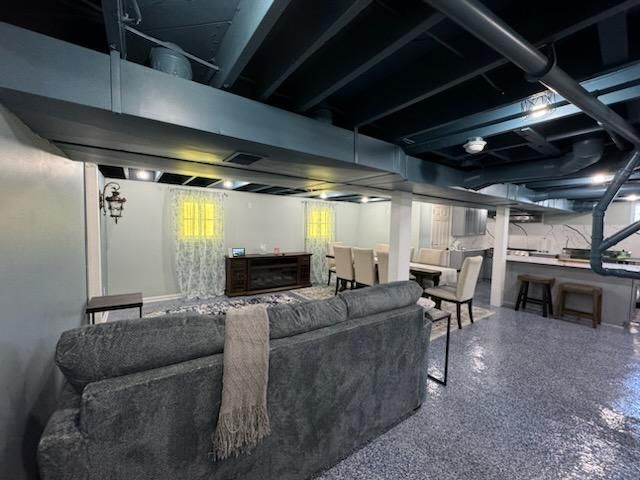
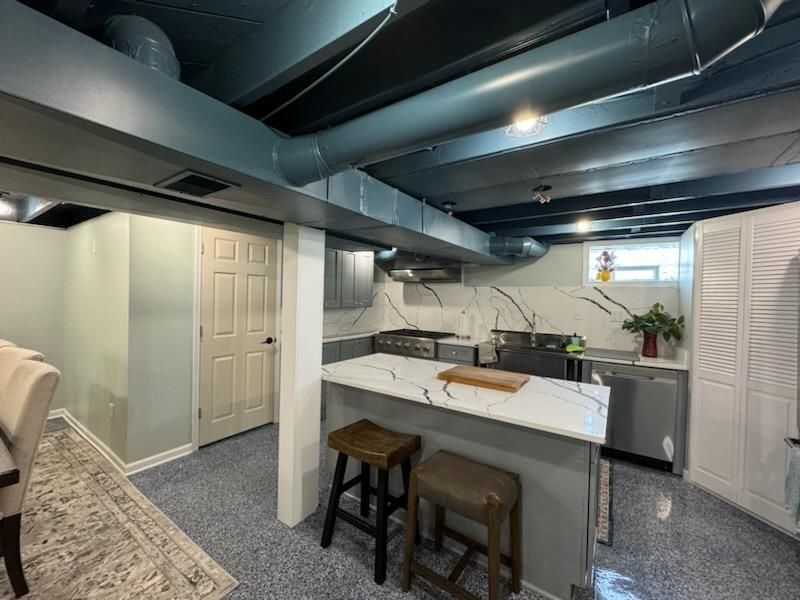
Not just a rec room. A real part of the house.
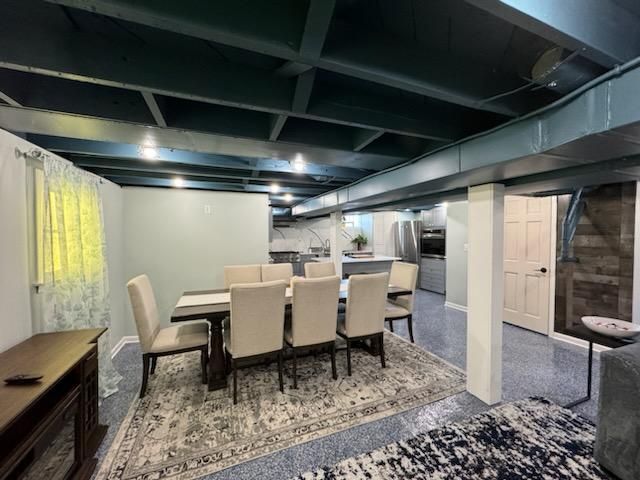
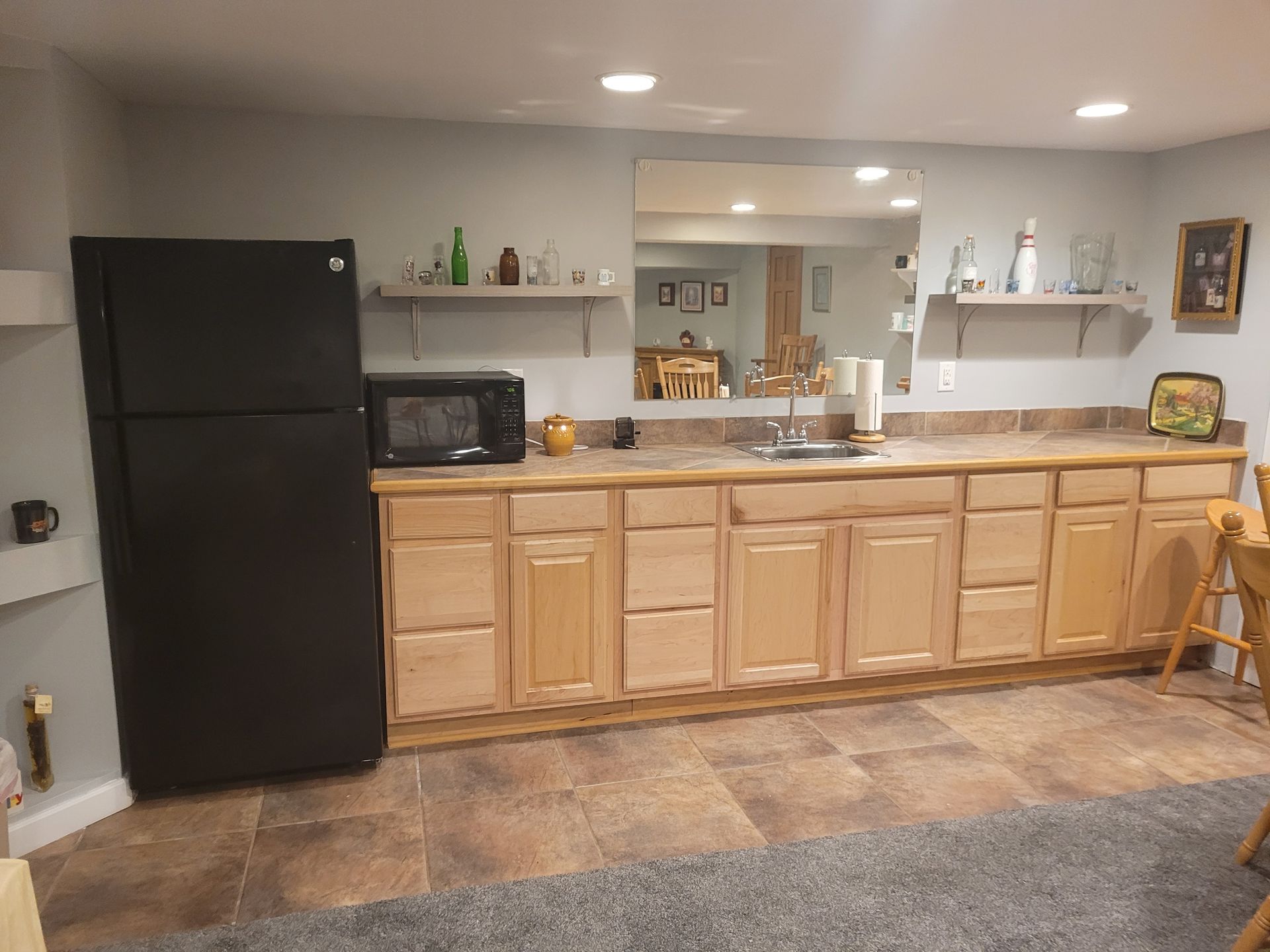
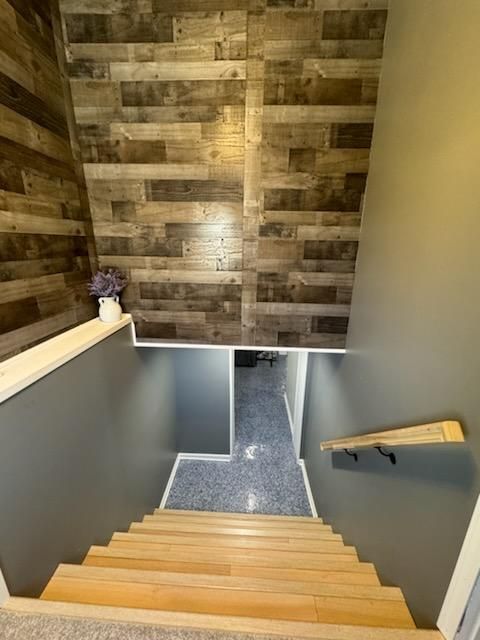
A properly finished basement can hold everything a main floor can. From kitchens and living spaces to bars, offices, and guest suites, what gets built below grade comes down to how you want to use the room.
The one thing to fix before any framing goes in.
Moisture is the reason most finished basements end up torn back out. Before drywall, insulation, or flooring, we test, we fix any active water issues, and we install the drainage a basement needs to stay dry for good. Skipping this step is what makes basement remodels fail.
What we check before anything gets built down there.
Every basement finish job starts with the same three questions. If any of them comes back with a yes, we fix the cause before we talk framing.
Is water coming in?
Visible staining on walls or floor, efflorescence, seeping at the slab edge. If yes, we find the source, regrade, or add interior drain tile before anything else happens.
Humidity baseline?
We check humidity before anything goes up. High basement humidity ruins insulation and flooring. Dehumidifier or HVAC fix depending on the read.
Sump, drains, backup?
Sump pump working? Battery backup in case of power loss? Floor drain free? The mechanical side needs to be operational before framing closes it off.
The build order that keeps a basement dry, warm, and quiet.
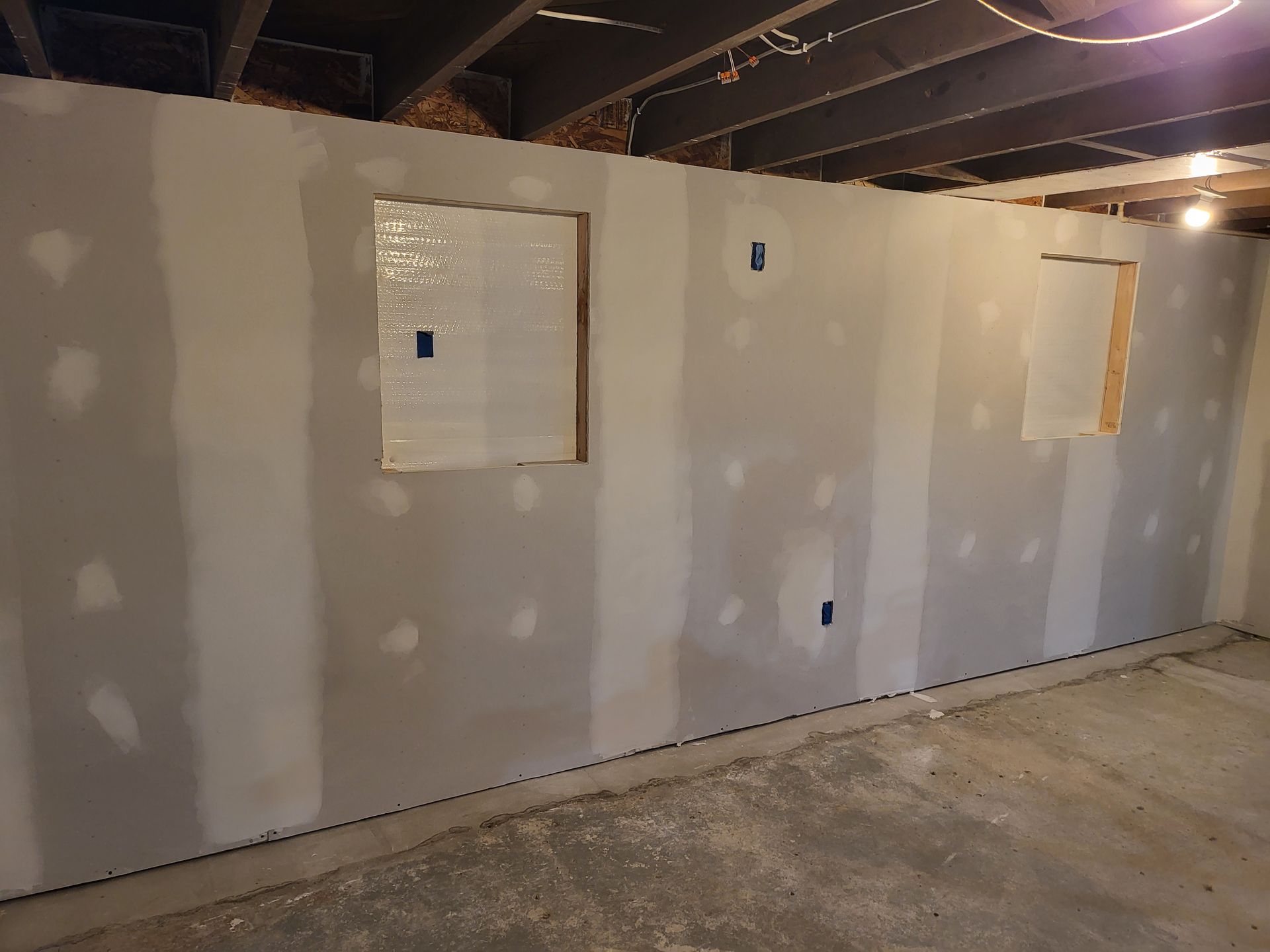
Basement framing is a different animal than a main-floor build. Walls need to handle moisture, insulation has to be matched to the wall assembly, and the ceiling has to play nice with existing plumbing, HVAC, and electrical above it.
Sequence matters. Each phase gets inspected before the next one closes it in, so nothing important ends up hidden behind drywall.
If there is a bedroom down there, there needs to be a way out.
Code in Michigan requires any sleeping room in a basement to have either a conforming egress window or a walkout door that opens to grade. This is a fire safety rule, not a design preference.
If you are adding a basement bedroom, the egress window goes in before the framing changes. Cutting the foundation is done early so we know exactly where walls, ducts, and finishes can go around it.
Window placement, well sizing, and ladder requirements all follow the current Michigan residential code. We pull the permit, schedule the inspection, and document everything for the file so the bedroom is legal to use as a sleeping room.
The two decisions that set the whole feel of the space.
Paint color and trim work the same way they do upstairs, but flooring and ceiling behave differently below grade. Here is how we think about both.
Waterproof is the rule
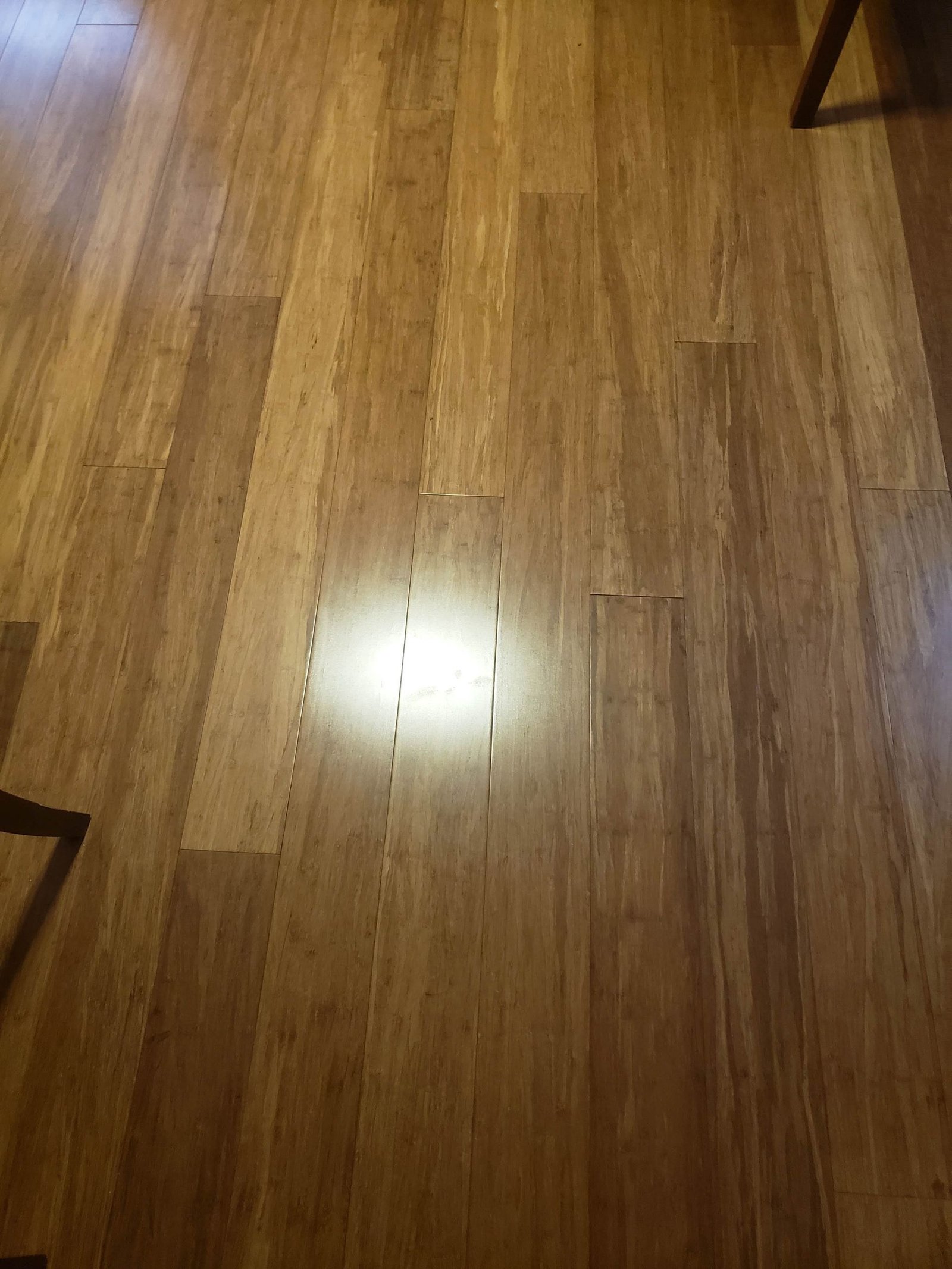
Solid hardwood does not belong in a basement. Moisture, humidity swings, and the rare sump failure will ruin it. Stick to floors that can survive a wet day.
- Luxury vinyl plank. The default for most basements.
- Porcelain tile for full-below-grade bathrooms
- Carpet tiles for media rooms (easy to swap a damaged square)
- Engineered wood only with a sealed vapor barrier over concrete
Drywall vs. drop tile
Drywall ceilings look clean and continuous with the rest of the house. Drop tile keeps access to plumbing and electrical above. There is a right answer for each project.
- Drywall. Cleaner, more “real room” feel, harder to service.
- Drop tile. Easy to lift for repairs, slightly more institutional.
- Mix: drywall in living spaces, drop tile in utility / under wet rooms
Explore our full range of renovation specialties.
Let’s talk about
your project.
We bring pride and passion to every project that we undertake, with a professional team of designers, project managers and tradespeople. Request your free consultation today.